
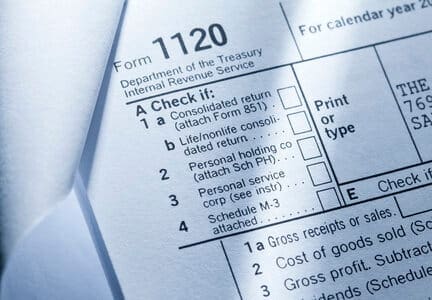
 Guide to Form 1120
A Form 1120 is a corporation tax return. A corporation uses one to report their credits, deductions, losses, gains, and income. It is also used to find out their tax liability and how much they owe. In this article, we will go over the basics of a Form 1120.
Types of Applicable Organizations
There are different types of organizations that file a Form 1120. These include the following:
- 1120-C: Cooperative organizations, farm cooperatives
- 1120-F: Foreign corporations
- 1120-H: Condo management, residential real estate management, timeshares elected to be treated as a homeowner’s organization
- 1120-L: Life insurance companies
- 1120-POL: Political organizations
- 1120-S: S-Corporations
Who Files a Form 1120
Even if they do not have taxable income, all domestic corporations must file a Form 1120. This would include corporations in bankruptcy proceedings and LLCs that have elected to be taxed as a corporation.
When Do You File
If the end of your tax year is December, your taxes are due March 15th, or September 15th if you file an extension. If your tax year does not expire in December, your taxes will be due the 15th day of the 4th month after the end of your tax year. However, if this day falls on a Saturday, Sunday, or holiday, the due date is extended until the next business day.
Questions? Want to schedule an appointment? Contact us by clicking here.










Leave A Comment
You must be logged in to post a comment.